
AC tune-ups and maintenance plans in Oro Valley, AZ
Most July breakdowns start in April: a weak capacitor, a coil caked with last year's monsoon dust, a drain starting to clog. A spring tune-up finds those before the heat. Our plan adds a fall check after monsoon season, and we write the temperature split on the invoice both times.
- Spring tune-up before the heat
- Fall coil and filter check after monsoon
- Temperature split recorded each visit
Book a tune-up
We usually answer the same day, and within the hour when a house has no cooling.
No cooling and someone at home is elderly, unwell or very young? Call or text now: 520-555-0163
Two visits a year
Timed to the two hard moments of a Tucson cooling year.
Spring, before the heat
Coil cleaned, electrical parts tested, refrigerant checked, drain cleared, split measured. The parts most likely to fail in July get looked at in April.
Fall, after monsoon
Dust rinsed from the coil, filter changed, drain checked. For a heat pump, heating mode checked before winter.
Readings on every invoice
The split and pressures recorded each visit, so a slow decline shows up before a breakdown.
What last monsoon left in your coil
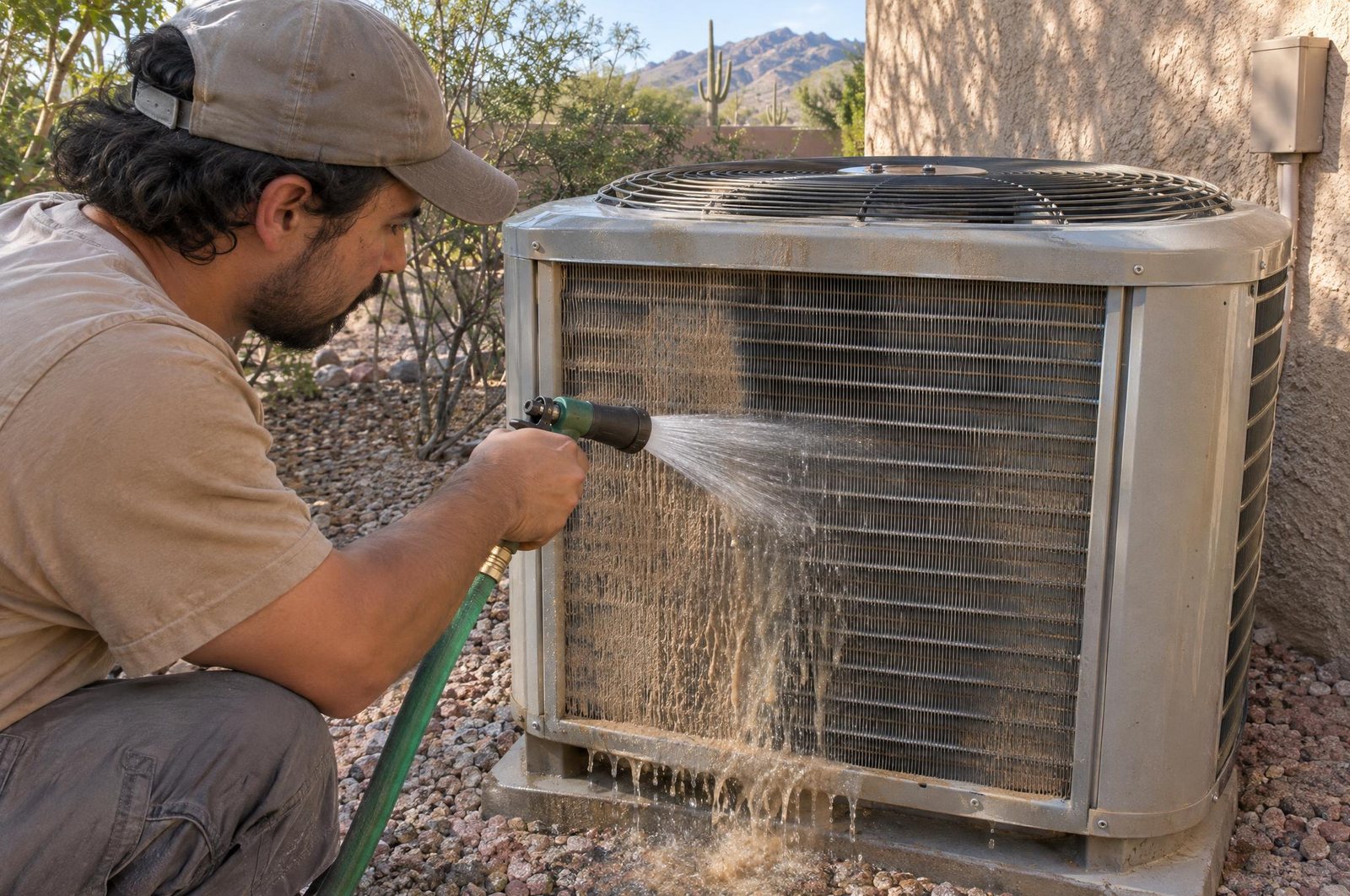
Monsoon season runs from June 15 through September 30, and its dust storms leave a fine coat of desert in every outdoor coil and filter they reach. By the next spring, a coil can be packed enough that the unit runs all afternoon without catching up.
In the review beside this section, a Marana customer's split went from 11 degrees to 18 after a cleaning. Not every coil gives that much back, but a blocked one is never doing the house any good.
“Spring tune-up on the plan. The coil was packed with dust from last monsoon and she said that was most of why the system ran all afternoon. Cleaned it, checked the refrigerant, and the split went from 11 degrees back to 18.”
What we check at a tune-up
Coil and filter.
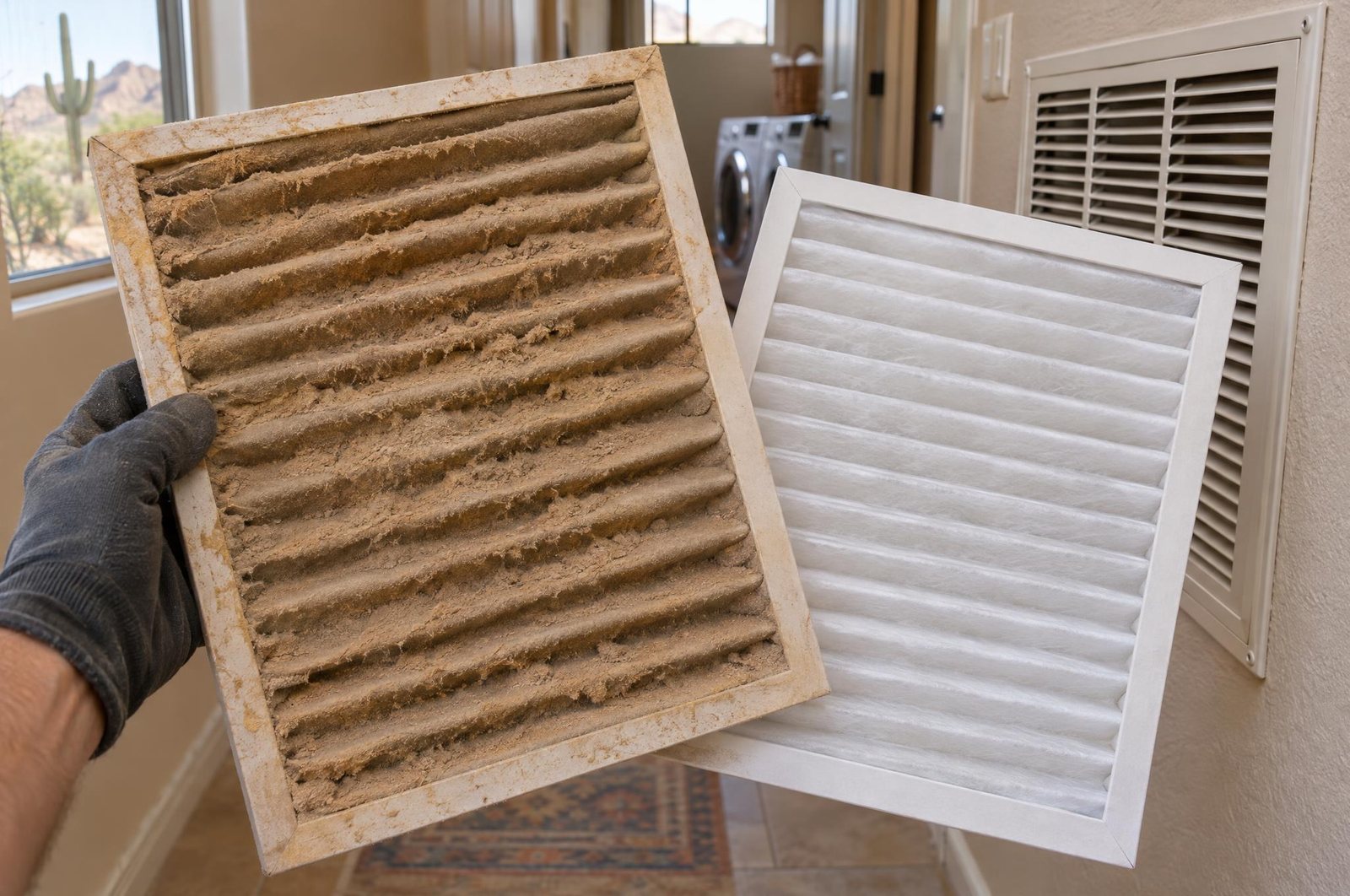
Outdoor coil rinsed, indoor coil inspected, filter changed or sized.
Electrical parts.
Capacitor tested, contactor inspected, connections tightened.
Refrigerant and drain.
Pressures checked, condensate drain cleared.
The split.
Measured and written on your invoice.
Small signs worth a call before July
| What you notice | What it can mean |
|---|---|
| Unit runs longer than last year | Dirty coil, low refrigerant, or a leaking duct |
| Outdoor fan slow to start | A capacitor on its way out |
| Water around the air handler | A drain starting to clog |
| Dust from the vents | A loaded filter or a return leak pulling attic dust |
What you can do between visits
A plan does not replace the few minutes of care a system needs from you. These are the ones that matter most here.
Check the filter monthly in dusty months
After a dust storm, look at it the next day. A loaded filter starves the coil of air and can freeze it.
Keep the outdoor unit clear
Leave about two feet of open space around a ground unit. Trim back plants and keep gravel, leaves and tumbleweeds off the coil.
Hose the coil gently after a storm
Power off at the disconnect first, then a gentle rinse from the inside out if you can reach it. No pressure washer: it bends the fins.
Watch the drain line
If you know where the condensate line ends outside, check it drips when the system runs. A dry line in July can mean a clog.
Note the hot rooms
Tell us at the spring visit which rooms lag. That is often a duct, and spring is the time to look, before the attic is at its hottest.
Tune-ups across the north side
Marana and Tucson
Ground split systems and rooftop units, both taking the full brunt of monsoon dust.
SaddleBrooke and Casas Adobes
Many older units where a spring check catches a weak part early.
The same technician, year after year

Teresa Ochoa, owner and lead technician
Teresa answers the phone, takes the temperatures and writes the price. You deal with her from the first call to the last vent.
Book a cooling visit
We usually answer the same day, and within the hour when a house has no cooling.
No cooling and someone at home is elderly, unwell or very young? Call or text now: 520-555-0163
Maintenance plan questions
When should I book a tune-up?
Spring, before the first run of 100 degree days. Tucson averages 68 days a year at 100 degrees or more, according to the National Weather Service, and the system works hardest through them. A fall check after monsoon season, which officially runs from June 15 to September 30, catches the dust the storms leave behind.
What does a tune-up include?
We clean or rinse the outdoor coil, check the indoor coil and filter, test the capacitor and contactor, check the refrigerant pressures and the condensate drain, tighten electrical connections, and measure the temperature split. You get the readings on the invoice.
Why does monsoon dust matter?
Dust storms pack fine dirt into the fins of the outdoor coil and load up the filter. A blocked coil cannot shed heat, so the unit runs longer, the split drops and parts run hotter. Rinsing the coil is one of the simplest things that helps.
How often should I change the filter?
It depends on the filter and the house, but in dusty months check it monthly. We tell you what size you need and how quickly yours loads up.
Do plan members get seen first in summer?
Yes. When the phones are full in July, plan members get the first available slots. A no-cooling call where someone at home is at risk in the heat still goes first, plan or no plan.
Book a tune-up before the heat
Related: duct sealing and heat pumps.
Book a tune-up
We usually answer the same day, and within the hour when a house has no cooling.
No cooling and someone at home is elderly, unwell or very young? Call or text now: 520-555-0163