
Duct sealing and cleaning in Oro Valley and Tucson
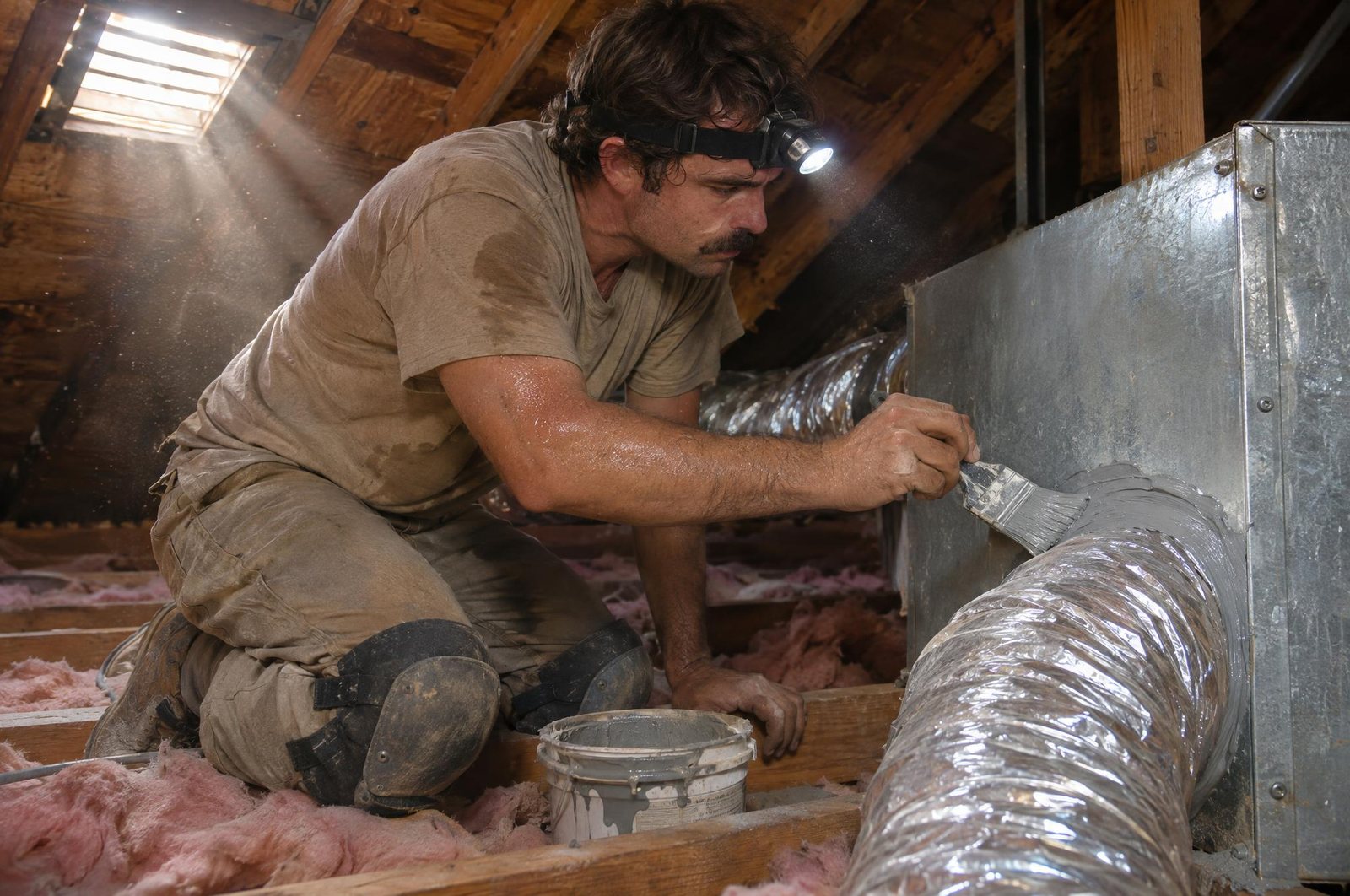
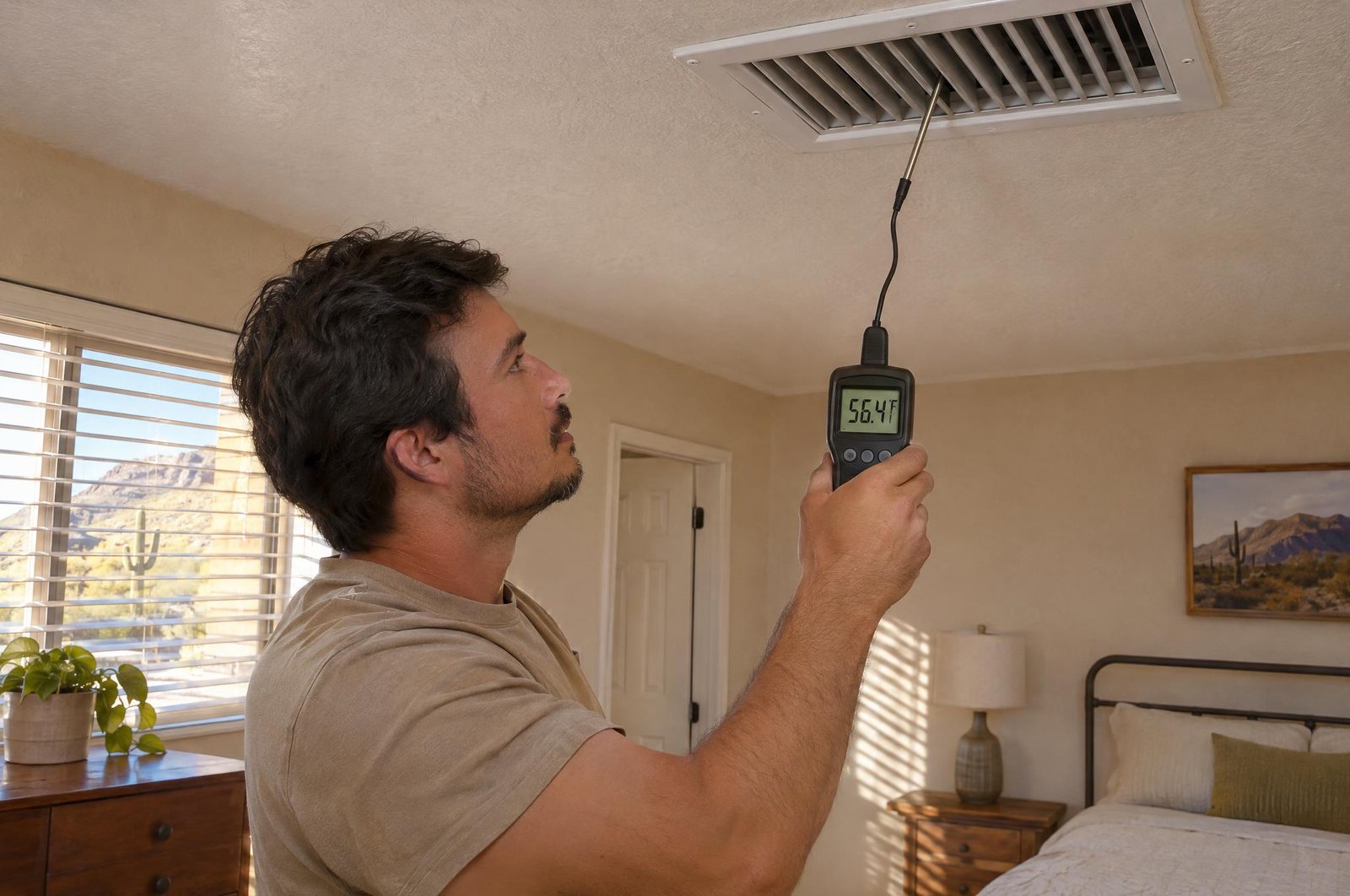
When one room never cools, the cause is usually a duct in the attic: a joint pulled apart, a run of flex duct crushed or kinked, or a duct too small for the room. We measure the vent, follow the duct, seal or repair it, and measure the room again so you can see what changed.
- We start at the room that is hot
- Leaks sealed with mastic, not just tape
- The room measured before and after
Tell us which room will not cool
We usually answer the same day, and within the hour when a house has no cooling.
No cooling and someone at home is elderly, unwell or very young? Call or text now: 520-555-0163
Where the cool air goes
On a July afternoon the air coming off a healthy unit is in the 50s. The attic around the ducts that carry it can pass 140. Every gap between those two is a place cooled air leaks out and hot attic air gets pulled in.
That is why a house can have a unit that tests fine and a bedroom that sits at 82. A new unit pushes more air into the same leaks. Sealing the ducts sends it where it was meant to go.
“Our back bedroom had been hot for three summers and two companies told us to buy a bigger unit. Teresa measured the vent, went up in the attic and found the duct to that room had come off the box. She sealed it, measured again, and the room dropped eight degrees.”
The gap a duct crosses
56degrees
Air leaving a healthy unit
Roughly 15 to 20 degrees below the return
140degrees
A summer attic can pass this
Where most north-side ducts run
82degrees
A back bedroom with a broken duct
A typical reading on the calls we get
What we usually find up there
Joints pulled apart
Flex duct slips off its collar over the years, especially where it was only taped.
Crushed or kinked runs
Stepped on, stored on, or pulled too tight around a corner. Air cannot get through.
Leaky boots and plenums
Gaps where ducts meet the ceiling or the air handler, often never sealed.
Return leaks pulling in dust
A leak on the return side draws attic dust and heat into the system.
Ducts too small for the room
A bedroom added or a room enlarged without changing its duct.
How a duct job goes
We measure the hot room and a good one.
The vents tell us where to look.
We trace the duct in the attic.
Photos of what we find, so you see it too.
We seal and repair.
Mastic on joints, clamps, straps, new runs where needed.
We measure the room again.
The before and after go on your invoice.
Where hot rooms are most common
Catalina Foothills
Long duct runs and big west glass in hillside homes.
The owner goes up in the attic

Teresa Ochoa, owner and lead technician
Teresa answers the phone, takes the temperatures and writes the price. You deal with her from the first call to the last vent.
Book a cooling visit
We usually answer the same day, and within the hour when a house has no cooling.
No cooling and someone at home is elderly, unwell or very young? Call or text now: 520-555-0163
Duct sealing and cleaning questions
Why does one room never cool?
Usually the cool air for that room is lost on the way. In a single-story north-side house the ducts run through the attic, which can pass 140 degrees in summer. A loose joint, a crushed run of flex duct or a disconnected boot dumps cooled air into that heat. A west-facing room with a lot of glass can also gain more heat than its duct can carry.
How do you find a duct leak?
We measure the air at the vent in the hot room and at a vent in a good room, then go into the attic and follow the duct. Most leaks are at joints, at the boots where ducts meet the ceiling, and at the plenum on the air handler. Crushed and kinked flex duct shows up when you trace it.
Is foil tape enough to seal a duct?
Tape on its own tends to let go in attic heat. We seal joints with mastic, a thick paste that sets and stays flexible, and use proper clamps and tape where they belong. Then we measure.
Do I need my ducts cleaned?
Sometimes. If you see dust blowing from the vents, have done major work in the house, or find debris in the ducts, cleaning helps. Many dust problems are really leaks on the return side pulling attic dust in, and sealing fixes those. We tell you which you have.
Is changing ductwork a permit job?
In unincorporated Pima County, modifying or replacing ducts needs a permit, and replacing a whole system usually brings duct calculations with it in Tucson and Oro Valley too. Sealing existing joints is a repair. We tell you before we start whether your job needs one.
Will sealing ducts lower my bill?
It often helps, because the system stops cooling the attic. How much depends on how leaky the ducts were. We do not promise a number; we show you the temperatures before and after.
Tell us which room will not cool
Which room, which side of the house, and since when. Related: maintenance plans.
Book a duct check
We usually answer the same day, and within the hour when a house has no cooling.
No cooling and someone at home is elderly, unwell or very young? Call or text now: 520-555-0163