
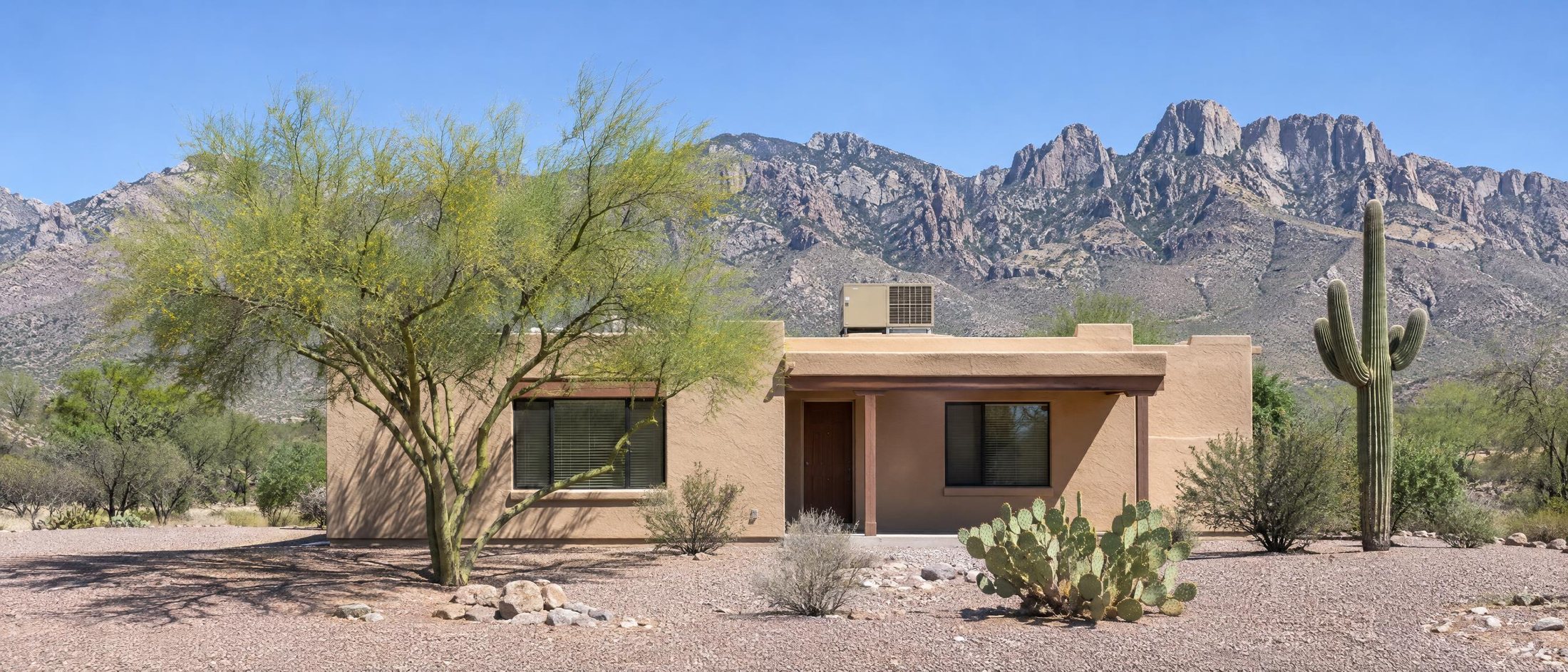
AC repair in Oro Valley, AZ, starting with where the heat gets in
Blue Hollow HVAC repairs and replaces air conditioners and heat pumps and seals attic ducts in Oro Valley and the north side of Tucson. On every visit we measure the temperatures that matter, outside, in the attic, at the vents and in the room, so you can see whether the trouble is the unit, the ducts or the sun.
- Temperatures measured and written on your invoice
- A written price before any work starts
- You deal with the owner, Teresa Ochoa
- No-cooling calls answered after hours, May to September
- Office in Oro Valley, about 7 to 18 miles from every town we cover
Tell us what the house is doing
We usually answer the same day, and within the hour when a house has no cooling.
No cooling and someone at home is elderly, unwell or very young? Call or text now: 520-555-0163
How a visit goes
The same four steps whether the AC quit at 3 pm or one bedroom has been hot for three summers.
You call, text or send the form.
Tell us the address and which rooms are hot. We give you the diagnostic price on the phone.
We take the temperatures.
Outside, in the attic, at the supply vents and in the room. They go on your invoice.
We show you where the heat gets in.
The unit, the ducts or the sun on a wall, and a written price for what fixes it.
We fix it and measure again.
You see the new numbers before we leave. If a new unit needs a permit, we pull it.
A day in July, in one house
Scroll through one July day in a single-story house on the north side of Tucson. Watch where the heat comes from, hour by hour, and which part of the system is losing.
7 am
The morning is the easy part
The house cooled overnight and the AC barely runs. This is when a weak system hides: it keeps up until about noon, so nobody calls until the afternoon.
1 pm
The sun is on the roof, and the ducts are up there with it
Most of the cool air in a north-side house travels through ducts in the attic, and a summer attic can pass 140 degrees. A loose joint or a crushed run of flex duct dumps cooled air into that heat before it reaches a room.
4 pm
The west wall takes the worst of it
By late afternoon the sun is low and square on the west side. Bedrooms on that side gain heat through the wall and the glass faster than anywhere else, which is why the back bedroom is so often the hot one.
5 pm
Then the unit itself starts to lose
A unit with a tired capacitor, a dirty coil after monsoon dust or low refrigerant cools the air by 8 or 10 degrees instead of 15 to 20. That is the number we measure first. Many failures happen on the hottest afternoon of the week, because that is when the unit works hardest.
9 pm
What fixed looks like
With the ducts sealed and the unit cooling properly, the split comes back, the back bedroom gets down to the thermostat, and the system finally gets to rest after sunset. We measure again before we leave so you can see it.
Three places the heat gets in
Nearly every call we take ends up at one of these. Knowing which one saves you from buying the wrong fix.
The unit
Capacitors, contactors, refrigerant leaks, a coil caked with dust. The temperature split at the unit tells us. Usually a repair, sometimes a replacement, and we say which.
The ducts
A good split at the unit but warm air at one vent means the cool air is lost on the way, usually in the attic. Sealing and repairing ducts often fixes a hot room for far less than a new system.
The sun
West and south walls, big glass and a dark roof add heat the system has to remove. We tell you when the sun is the problem, and what helps, before anyone talks about a bigger unit.
The temperatures we write on your invoice
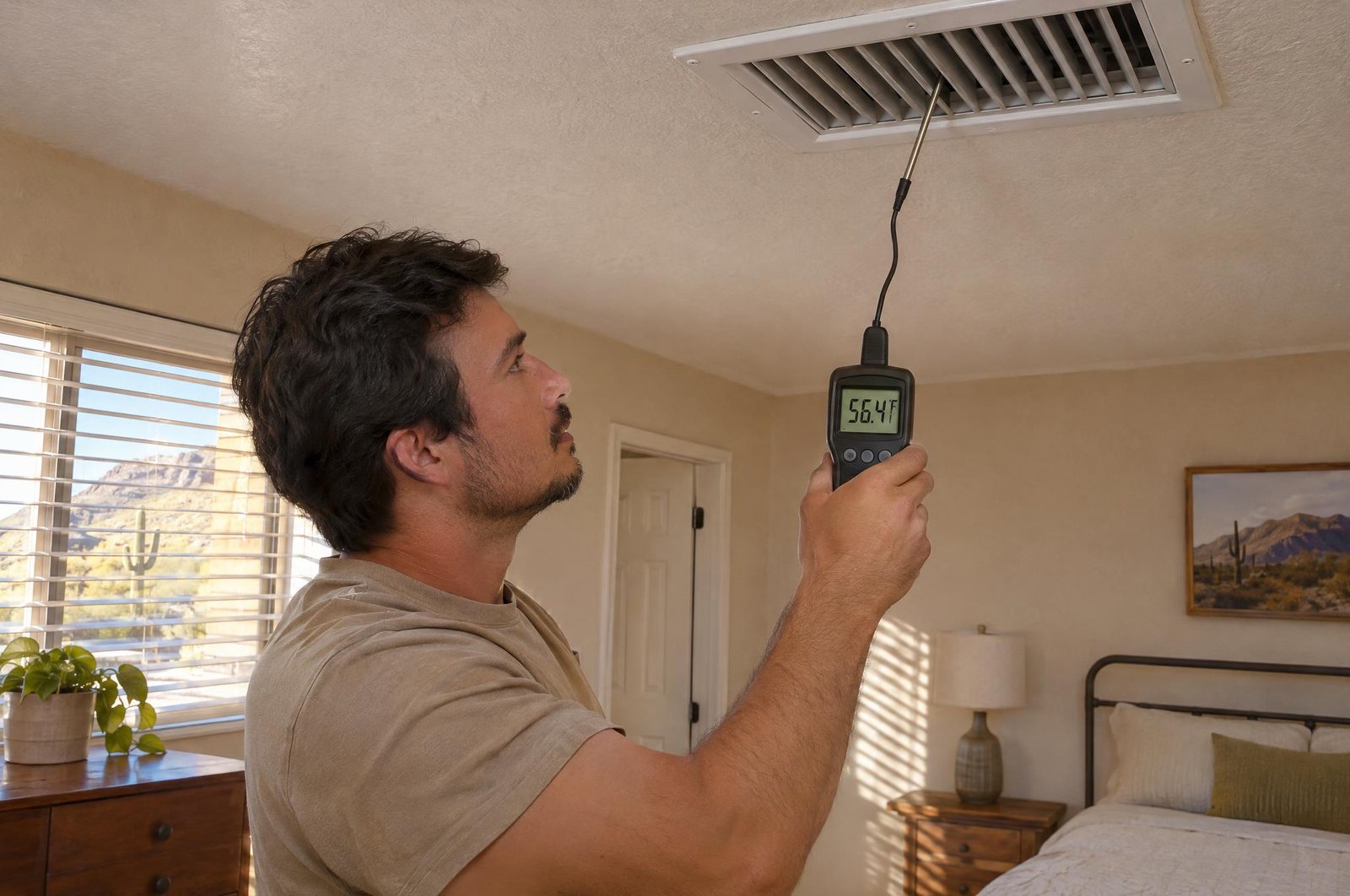
Four readings from a typical July afternoon visit. Your own house will read differently, which is the point of measuring.
110degrees
Outside, in the shade of the unit
Tucson averages 68 days a year at 100 degrees or more (National Weather Service, 1991 to 2020 normals)
140degrees
In the attic, where the ducts run
A summer attic can pass this, which is why duct leaks matter so much here
56degrees
At a supply vent
Roughly 15 to 20 degrees below the air going back in, when the system is healthy
76degrees
In the back bedroom
The room that tells you whether the fix worked
When one room never cools
The most common call we get is not a dead unit. It is a house where the living room is fine and the back bedroom sits at 82 all afternoon, and the last company offered a bigger system.
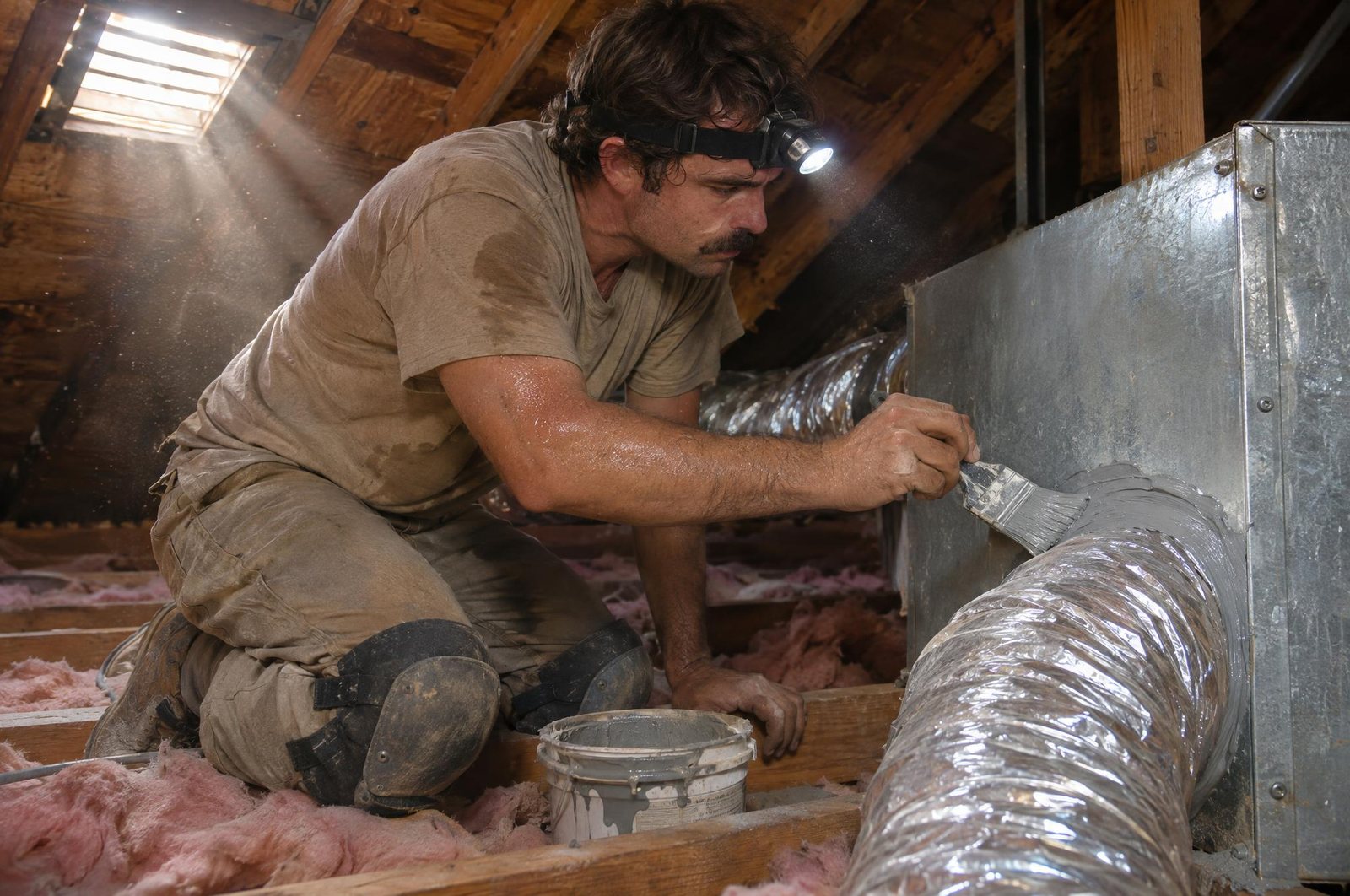
We start at that room. We measure the air at its vent and at the unit, then go into the attic and follow the duct. Most of the time we find a joint pulled apart, a run of flex duct crushed under a storage box, or a duct that was never sized for the room.
What it changes: fixing the duct costs a fraction of a new unit, and a new unit would not have fixed it.
“Our back bedroom had been hot for three summers and two companies told us to buy a bigger unit. Teresa measured the vent, went up in the attic and found the duct to that room had come off the box. She sealed it, measured again, and the room dropped eight degrees.”
What customers wrote
These are sample reviews written for this demonstration site, one for each kind of job. On a live site this band links every review to the profile where it was posted.
“The AC quit at about two in the afternoon and it was 108 out. Teresa was there before four, found a bulged capacitor, showed it to us next to the new one, and the house was cooling again before dinner. She wrote the temperatures on the invoice so we could see the difference.”
Ray and Linda P. AC repair, Casas Adobes Sample review, “Our back bedroom had been hot for three summers and two companies told us to buy a bigger unit. Teresa measured the vent, went up in the attic and found the duct to that room had come off the box. She sealed it, measured again, and the room dropped eight degrees.”
Marisa K. Duct sealing, Catalina Foothills Sample review, “We replaced a 20 year old gas pack with a heat pump. She did a proper load calculation, explained why the same size was right for our house, and pulled the Pinal County permit. The bill for the first August was lower and the house is quieter.”
Gordon H. Heat pump installation, SaddleBrooke Sample review, “Spring tune-up on the plan. The coil was packed with dust from last monsoon and she said that was most of why the system ran all afternoon. Cleaned it, checked the refrigerant, and the split went from 11 degrees back to 18.”
Danielle R. Maintenance plan, Marana Sample review,
Cooling services for Oro Valley homes
Six things we do every week from May to September, and most of the year besides. Open a group to see what is in it.
When it stops cooling
Keeping the cool in
Every service, in one place
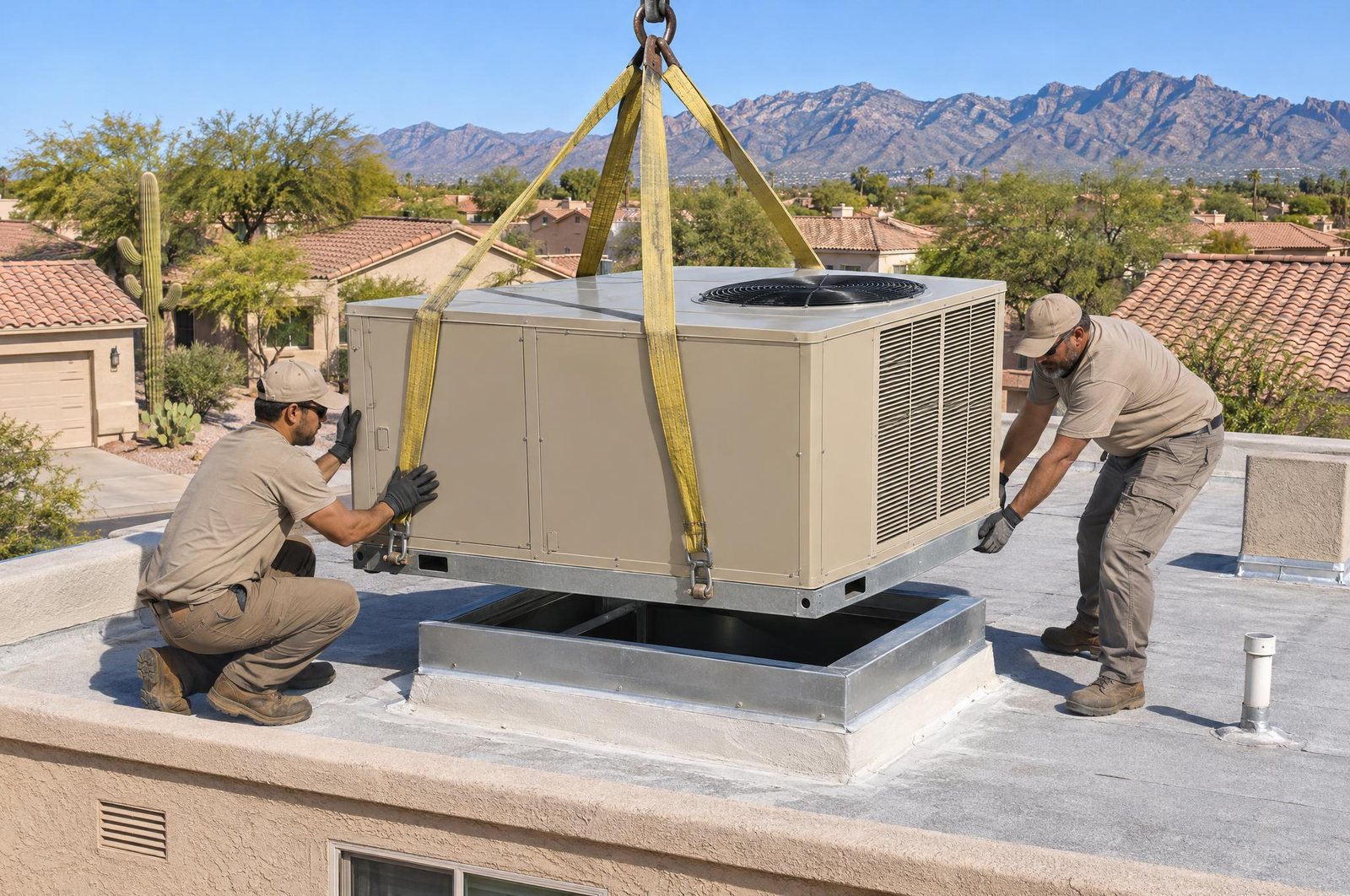
You deal with the owner
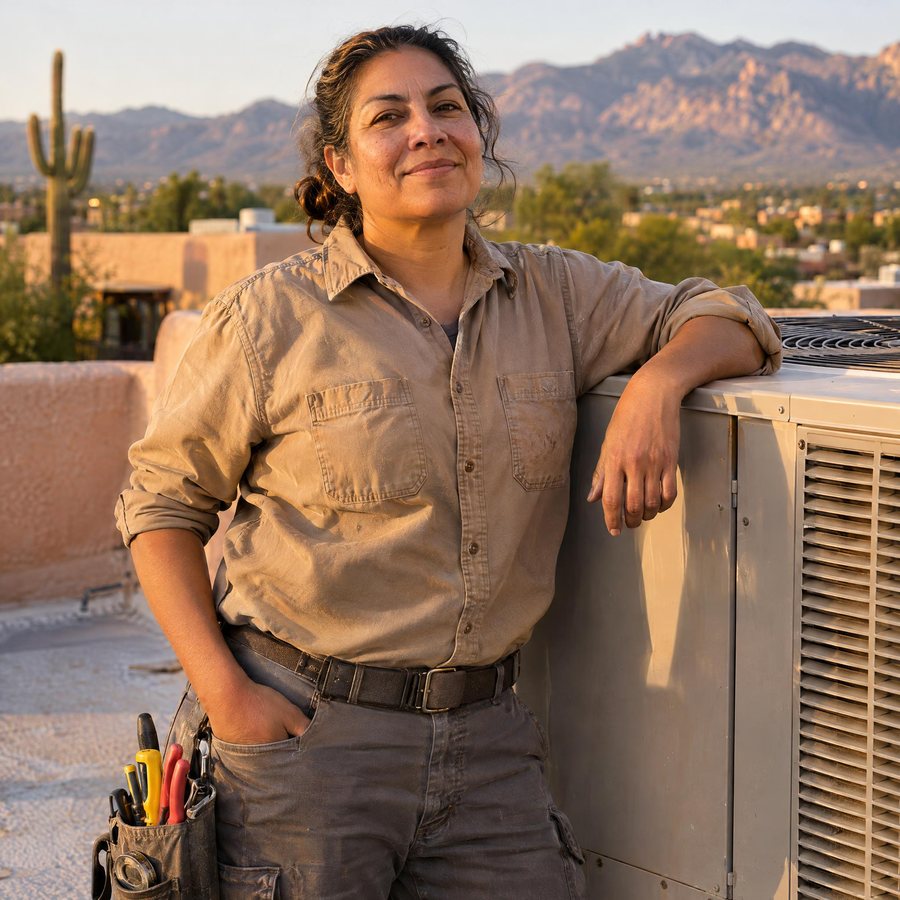
Teresa Ochoa, owner and lead technician
Teresa answers the phone, takes the temperatures and writes the price. You deal with her from the first call to the last vent.
Book a cooling visit
We usually answer the same day, and within the hour when a house has no cooling.
No cooling and someone at home is elderly, unwell or very young? Call or text now: 520-555-0163
Where we work, and who permits a new unit there
The office is in Oro Valley. Each town below has its own page with the drive, the houses we see and the office that permits a replacement. See all areas we serve.
| Town | From our office | Permit for a new unit |
|---|---|---|
| Oro Valley (our office) | Home base | Town of Oro Valley permitting |
| Casas Adobes | About 7 miles, 15 minutes or so | Pima County Development Services |
| SaddleBrooke | About 12 miles, 20 to 25 minutes | Pinal County Building Safety (a like-for-like swap may be exempt; we check) |
| Catalina Foothills | About 12 miles, 20 to 25 minutes | Pima County Development Services |
| Tucson | About 13 miles, 25 to 30 minutes | City of Tucson Planning and Development Services |
| Marana | About 18 miles, 30 to 35 minutes | Town of Marana Development Services |
Questions Oro Valley homeowners ask before they call
My AC is running but the house will not cool. What is usually wrong?
On a north-side Tucson afternoon it is usually one of three things: the unit itself (a failed capacitor, low refrigerant, a dirty or frozen coil), the ducts in the attic leaking or crushed, or one side of the house taking more sun than the system can keep up with. Measuring the air at the unit, at the vents and in the room tells us which. See AC repair.
What is a temperature split, and why do you write it down?
It is the difference between the air going back into the system and the air coming out of the vents. A healthy air conditioner usually cools the air by roughly 15 to 20 degrees. A much smaller split points at the unit; a good split at the unit but warm air in one room points at the ducts. Writing it on the invoice gives you a number to compare next summer.
Do you give prices over the phone?
We tell you the price of the diagnostic visit on the phone, before anyone drives out. Repair prices we write down after we have looked, before any work starts. If a cleaning or a part is all it needs, we say so rather than quote a new system.
Should I replace my AC with a bigger unit?
Usually not. A unit that is too large cools the air fast, shuts off before it has dried it, and wears itself out starting and stopping. If one room is hot, the cause is more often a duct or the sun on a west wall than the size of the unit. We size a replacement with a load calculation for your house. See AC replacement and duct sealing.
What happens if the AC quits after hours in summer?
From May through September a technician is on call after office hours for homes with no cooling. If someone in the house is elderly, unwell, pregnant or very young, tell us on the phone so we can put you first. If anyone shows signs of heat illness, call 911. See emergency AC service.
Which towns do you cover?
Oro Valley, where the office is, plus Casas Adobes, SaddleBrooke, Catalina Foothills, Tucson and Marana. Each has its own page with the drive time, the permit office for a new unit, and the kind of houses we see there.
Tell us what the house is doing
Say which rooms are hot and since when. If the house has no cooling and someone at home is elderly, unwell or very young, call or text rather than using the form.
Book a cooling visit
We usually answer the same day, and within the hour when a house has no cooling.
No cooling and someone at home is elderly, unwell or very young? Call or text now: 520-555-0163